Los Angeles, Caltrans designs exclusive Games Route Network for LA28 athletes and officials
California Department of Transportation outlines a 369-mile permit-only roadway system, smart technology upgrades and a 2027 construction timeline to support the 2028 Olympic and Paralympic Games across Los Angeles, Orange and San Diego counties.
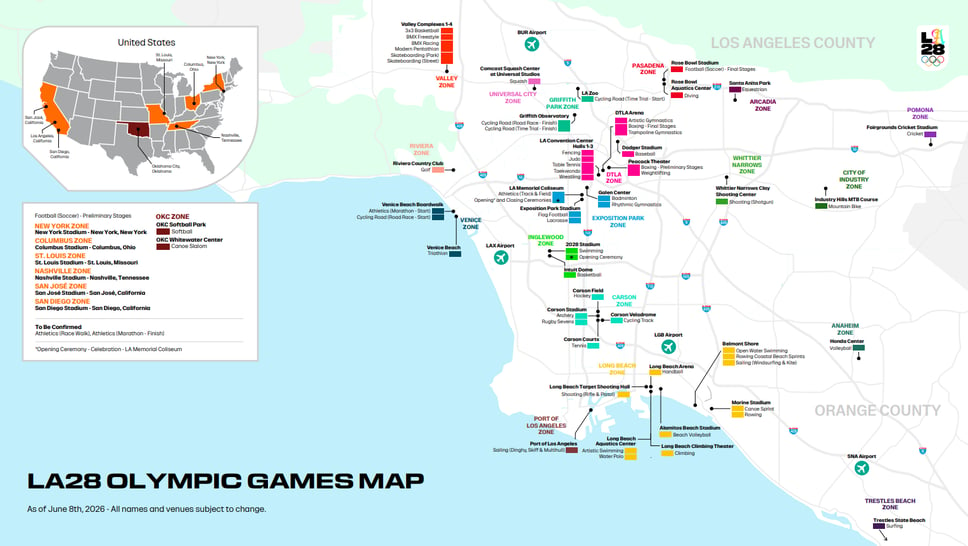
The California Department of Transportation (Caltrans) is finalizing a dedicated Games Route Network (GRN) that will give athletes, coaches and officials exclusive use of select freeway lanes and local streets during the 2028 Olympic and Paralympic Games. The plan, described on Caltrans’s District 7 project page, bundles intelligent-transportation-system upgrades, pavement markings and new signage with a temporary permit-only traffic regime that will run only for the duration of the Games.
According to a CBS News report, the network will span 369 miles of roadways – 236 miles on freeways and 134 miles on local streets – and will be marked with blue “LA28” signs. Vehicles without a permit that enter the exclusive lanes could face fines of nearly $300. The system is intended to keep Olympic traffic separate from regular commuters and to protect the tight competition schedule that athletes must follow.
Infrastructure upgrades and technology rollout
Caltrans’s overview lists a suite of smart-city tools that will be installed along the GRN, including CCTV cameras, wireless communications, traffic-signal upgrades, and active-transportation-management gantries. The agency also plans new pavement striping, roadside signs and electrical infrastructure to support the technology. Permanent installations such as the gantries, signs and CCTVs will remain after the Games, providing a lasting legacy for regional traffic management.
The project’s schedule, as posted by Caltrans, shows an upcoming procurement window in summer 2026 and an anticipated construction start in 2027. The procurement notice and the Games TDM Resource Guide are available as PDFs on the Caltrans site. These documents detail the procurement process and the technical standards that contractors will need to meet.
The CEQANET filing confirms that the GRN will be a temporary alteration to the existing state highway system, with the exclusive lanes removed after the Olympics and the highway returned to its pre-project condition. The filing also notes that the project qualifies for a categorical exemption under Section 15272 because it does not involve new facility construction.
Operational plan, routes and community impact
The permit-only network will connect the Olympic Village to competition sites across Los Angeles County, using major corridors such as Interstate 2, 5, 10, 101, 110, 210 and 405. In Orange County the routes include State Route 5, 55, 57, 73, 91 and the 405, while San Diego County will see use of State Route 5 at various locations. The CEQANET record lists these freeways and notes that temporary wayfinding signage and ramp closures will be part of the GRN.
Local advocates such as MoveLA’s Eli Lipman say the exclusive lanes will give athletes a reliable travel window, reducing the risk of missed events due to traffic delays. UCLA transportation researcher Juan Matute explained that the exclusive network was part of the LA28 bid package and is intended to keep Olympic traffic off regular lanes. He added that the network could become unnecessary if public-transit usage remains high, citing the dip in traffic observed during the 2026 World Cup.
Drivers who inadvertently enter the blue-labeled lanes without a permit could be cited, with fines approaching $300. The enforcement plan is still being refined, but Caltrans officials say the signage and camera system will help identify violations quickly.
The GRN will reshape how Angelenos move during the world’s biggest sporting event, but its legacy could be even bigger. Permanent traffic-management gantries and upgraded signals promise smoother commutes long after the medals are awarded, while the exclusive lanes test a new model for separating event traffic from everyday flow. For a region plagued by congestion, the project offers a rare chance to embed lasting infrastructure improvements under the banner of the Olympics.