Partial Lunar Eclipse, Southern California: Viewing Timeline and Best Spots
Angelenos can watch Thursday's partial 'blood moon' eclipse from 7:18 p.m. to after midnight, with Griffith Observatory offering open viewing and a live stream despite a mostly cloudy forecast.
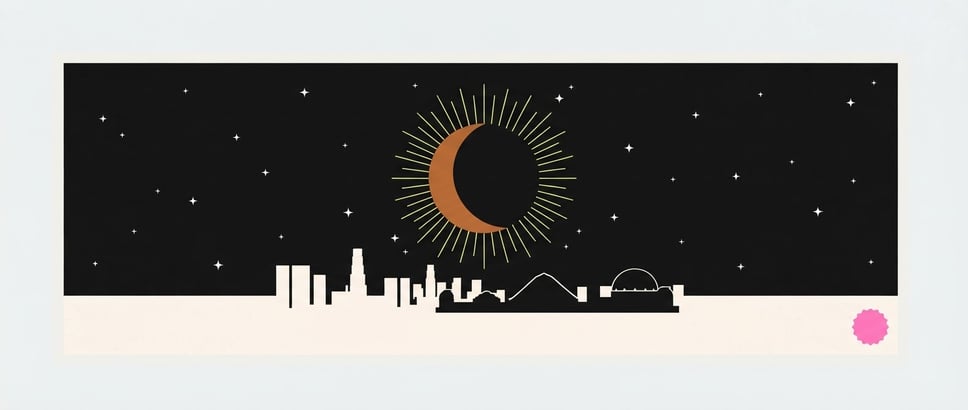
A deep partial lunar eclipse will sweep across the sky Thursday night, giving Southern California a front-row seat to a copper-tinged moon. The moon will rise over the southeastern horizon at 7:18 p.m., enter Earth's umbra at 7:34 p.m., peak at 9:13 p.m. with roughly 96 percent of its surface in shadow, and remain visible until just after midnight. The National Weather Service is calling for a mostly cloudy night, so clear skies are not guaranteed, but the event will still be visible to the naked eye when conditions improve.
The Los Angeles Times notes that Griffith Observatory will keep its doors open from 7:25 p.m. to 10 p.m. for anyone who wants to watch the eclipse in a community setting, though parking will be tight because of a scheduled Greek Theatre show. For those who prefer to stay home, the observatory will stream the event live on its website.
eclipse timeline and scientific details
The eclipse begins with a penumbral phase as the moon climbs into the faint outer shadow of Earth. At 7:34 p.m. local time, the moon slips into the darker umbra, creating the dramatic bite that will grow until the peak at 9:13 p.m. According to the NASA Scientific Visualization Studio, the moment of greatest eclipse occurs at 4:13 a.m. UTC, which translates to the same 9:13 p.m. PDT time, and 96.3 percent of the lunar disk will be covered. The coppery hue appears as sunlight bends through Earth's atmosphere and bathes the exposed portion of the moon.
The most visible phase will wane after 10:52 p.m., and the eclipse will fully end just after midnight. While the event is not a true "blood moon" because it is only partial, the visual effect is similar, with a deep reddish glow that can be striking even through thin cloud cover. The LA Times reports that nearly one billion people across the Americas will see the entire eclipse, and more than three billion will catch at least part of it.
For future sky-watchers, the next partial lunar eclipse visible from Los Angeles is scheduled for January 11 2028, according to NASA's eclipse database. This gives local astronomy clubs and schools a timeline for planning outreach and educational programs.
where to watch in los angeles
Griffith Observatory is the most convenient public venue. Its doors open at 7:25 p.m., just before the umbral phase begins, and stay open until 10 p.m., covering the peak and most of the visible portion. The observatory will provide telescopes, commentary, and a live broadcast for those who cannot secure a spot on the crowded parking lot. Visitors should expect limited parking and traffic congestion due to the concurrent Greek Theatre performance, so car-pooling or public transit is advisable.
If you prefer a private setting, the eclipse can be observed from any location with a clear view of the southeastern horizon. The LA Times suggests watching from home using the observatory's live stream, which will be hosted on the Griffith Observatory website. This option eliminates the parking hassle and still offers expert narration. For those with rooftop decks or backyard patios, the key is to position the view toward the east-south-east and keep an eye on cloud movement.
Astronomy enthusiasts may also want to compare the visualizations from NASA's site, which include time-coded diagrams and video clips of the moon's passage through Earth's shadows. These resources help viewers understand the geometry of the eclipse and anticipate the color shift as the umbra deepens. Whether you gather at Griffith, stream from your living room, or set up a backyard telescope, the partial eclipse offers a rare communal moment for Angelenos to look upward together.
Los Angeles residents get a unique chance to share a celestial event that bridges science, culture, and community. Watching the eclipse at Griffith ties into the city's long tradition of public sky-watching, while the live stream ensures accessibility for those facing traffic or cloudy skies. The event also sparks interest in local astronomy clubs and can inspire future STEM engagement across neighborhoods.