Metro Board approves $9.7B FY27 budget, expands safety, construction, and service hours
The Los Angeles County Metropolitan Transportation Authority board voted 9-0 to adopt a balanced $9.7 billion FY27 budget that adds 2.4% over the prior year, boosts safety and cleaning programs, funds major rail projects and maintains bus and rail service hours.
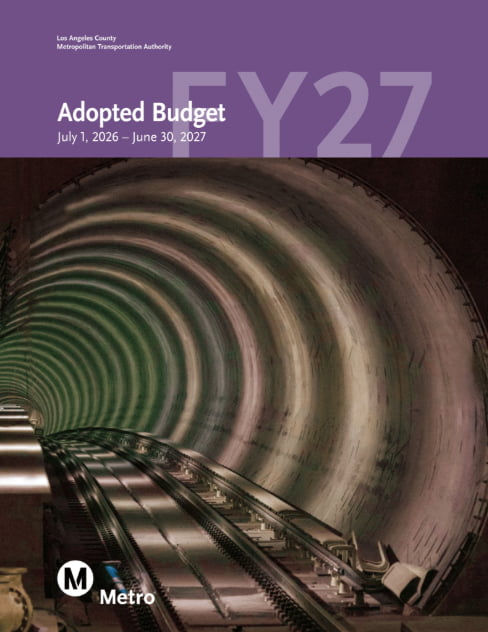
On Thursday the Metro Board of Directors approved a $9.7 billion budget for fiscal year 2026-27, marking a 2.4% increase over the previous plan and a 9-0 vote despite the agency’s large structural deficit, according to MyNewsLA. Interim chief financial officer Michelle Navarro described the plan as balanced, noting the difficulty of achieving fiscal discipline amid uncertain federal transit funding, inflation and other economic challenges.
The board’s approval follows a record-breaking public-input effort that yielded more than 7,500 submissions, a figure highlighted by both The Source and Mass Transit Magazine, and the full FY27 Proposed Budget Book can be downloaded from the agency’s Dropbox link.
Overall budget and fiscal discipline
The $9.7 billion FY27 budget represents a modest 2.4% growth, which sits below the current 3% national inflation rate and reflects Metro’s commitment to fiscal restraint, as noted by both The Source and Mass Transit Magazine. The board’s unanimous vote was recorded in the official Board agenda, with Mayor Karen Bass, Councilwoman Katy Yaroslavsky, Inglewood Mayor James Butts and Glendale Councilman Ara Najarian absent.
Metro’s finance team highlighted that the budget maintains core services without any service cuts, even as the agency confronts rising operational and construction costs. The agency’s public-facing finance portal lists the FY27 Adopted Budget and provides a downloadable PDF of the budget book, which is also available via a Dropbox link for deeper analysis.
Public engagement shaped the final numbers: more than 7,500 comments were incorporated, reinforcing Metro’s “Listen and Learn” equity pillar. County Supervisor Janice Hahn praised the outreach, noting that most respondents left priority categories unchanged, signaling that rider feedback on safety, cleanliness and frequency is reflected in the final plan.
Key allocations: safety, cleaning, construction and service levels
Safety receives a $430 million allocation, a 1.9% increase that funds care-based programs such as Metro Ambassadors, homeless outreach and crisis response, with $87.6 million earmarked for those services. The Department of Public Safety also gains $5.8 million to hire its first sworn police officers, marking a historic milestone for the agency.
Cleaning and station experience upgrades together total $340.6 million, with $311 million dedicated to daily and “Hot Spot” cleaning at terminals and stations, and $29.6 million for lighting, ADA-accessible restrooms, elevators, escalators and taller faregates designed to curb fare evasion. These investments follow a 2026 customer-satisfaction survey that showed an 87% approval rating.
Construction funding includes $680.2 million for the D Line Extension, covering wrap-up work on Section 1 and the final phases of Sections 2 and 3. Additional capital is directed to the East San Fernando Valley Light Rail Project ($319.2 million), the Southeast Gateway Line ($188.2 million) and design work for the A Line Foothill Extension toward Claremont.
Service levels are protected with 7.13 million revenue service hours for buses and 1.45 million for rail system-wide, ensuring reliable transportation across the county. The budget also allocates $1.8 billion for regional pass-through funding to cities, $310 million for cleaning efforts, and $23.8 million for the Metro Micro ride-share program, underscoring Metro’s multi-modal approach.
Metro’s FY27 budget shows how the agency can balance modest growth with targeted investments in safety, cleanliness and major construction, a mix that matters for Angelenos facing rising congestion and the upcoming 2028 Olympics. By preserving service hours while expanding high-impact projects, the plan aims to keep the region moving without overburdening riders with fare hikes.