Lucas Museum of Narrative Art opens this Tuesday in Exposition park
George Lucas and Mellody Hobson’s 300,000-square-foot museum opens to the public in South Los Angeles with free park, gardens and a $25 adult admission.
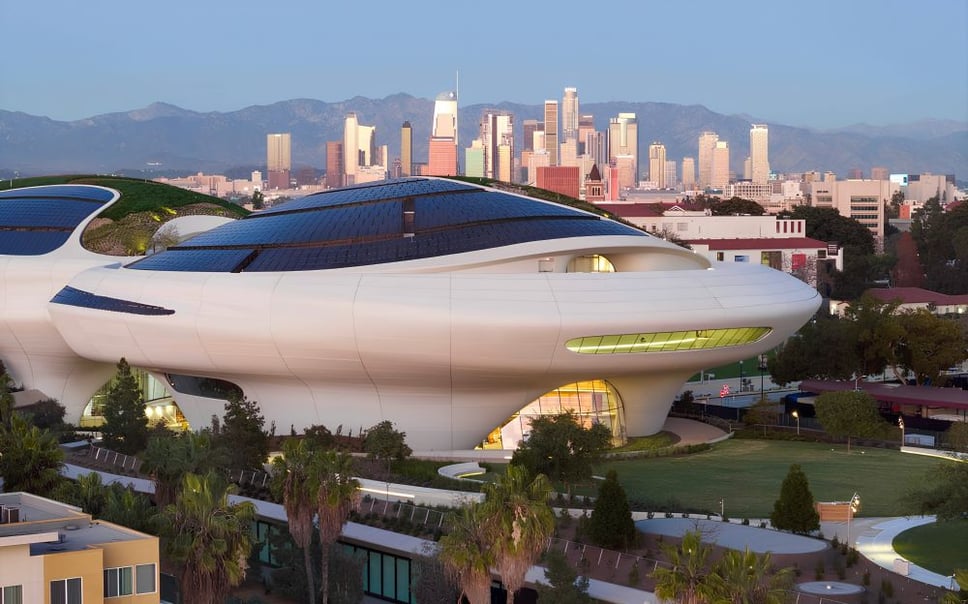
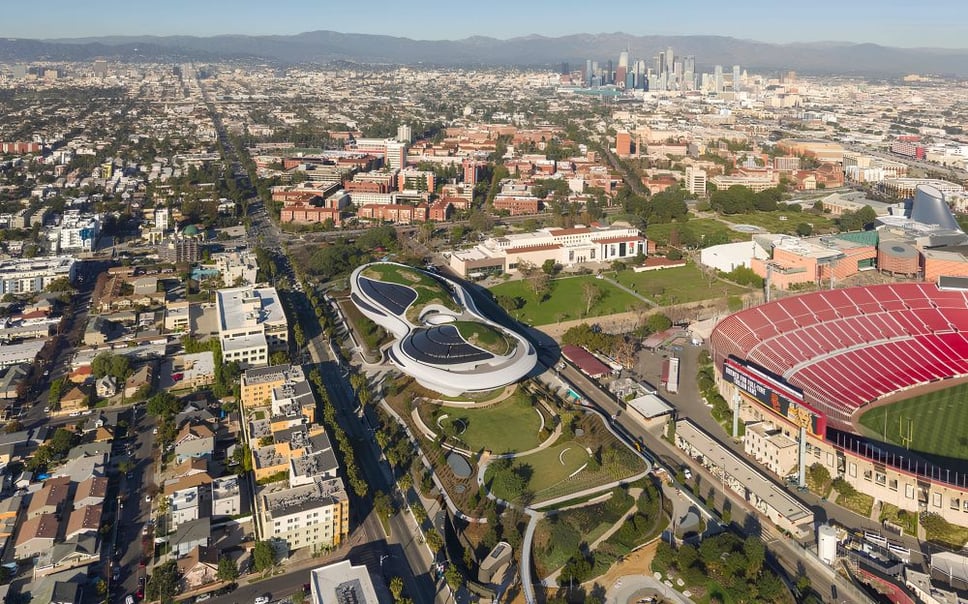
The Lucas Museum of Narrative Art will welcome its first visitors on this Tuesday, September 22nd in Los Angeles, as a first-of-its-kind institution dedicated to visual storytelling. Founded by filmmaker George Lucas and investor Mellody Hobson, the museum occupies a 300,000-square-foot building designed by Ma Yansong of MAD Architects and sits on a 13-acre former parking lot in historic Exposition Park, Los Angeles.
Admission for adults is $25, seniors $21 and anyone 17 and under enters for free, but the surrounding park, gardens, café, restaurant and research library are open without a ticket. All visitors must reserve a timed-entry ticket in advance, a process handled through the museum’s website.
The building and public spaces
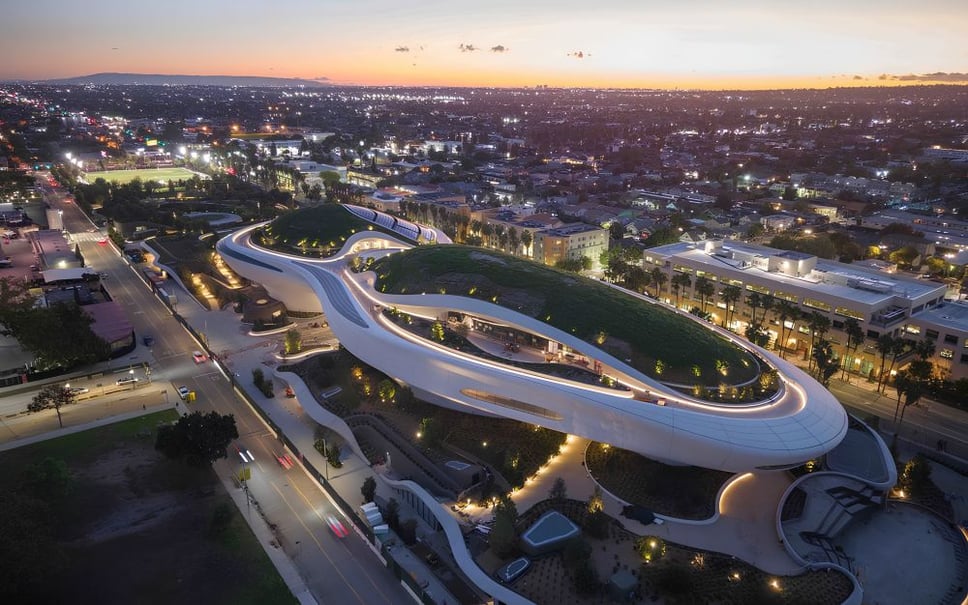
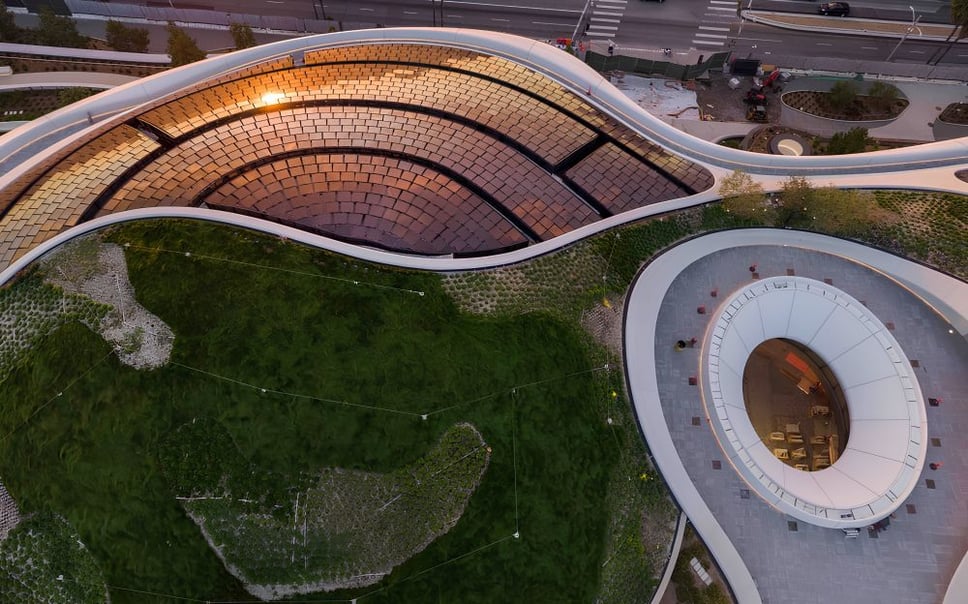
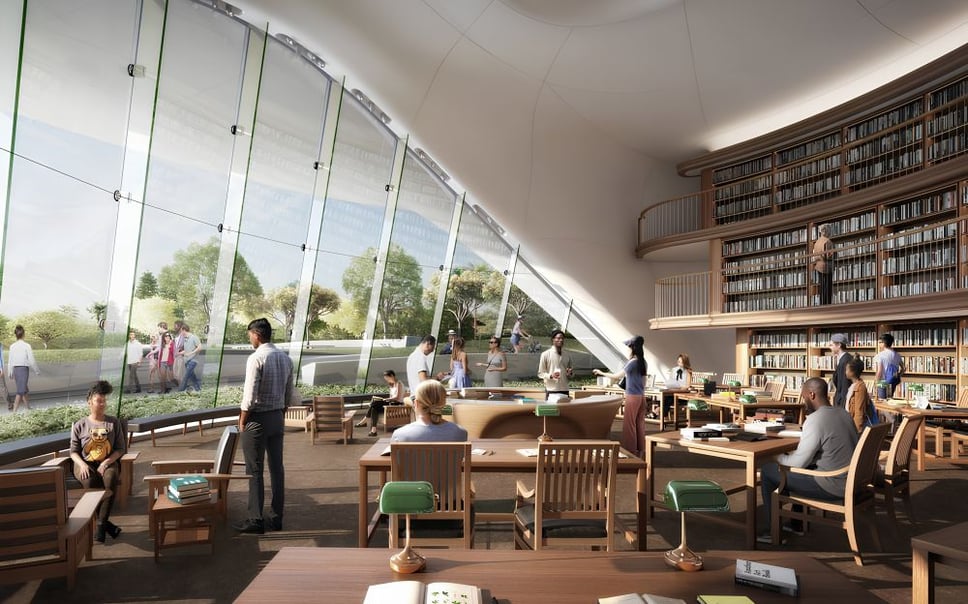
The soaring structure, described by the museum as “light and free as a cloud,” features more than 100,000 square feet of gallery space spread across 30-plus galleries, two theaters, a café, a restaurant called Skywalker Grill, a store and a research library. The design integrates the building with the landscape, allowing natural light to flood the interior while the exterior presents a fluid, cloud-like silhouette.
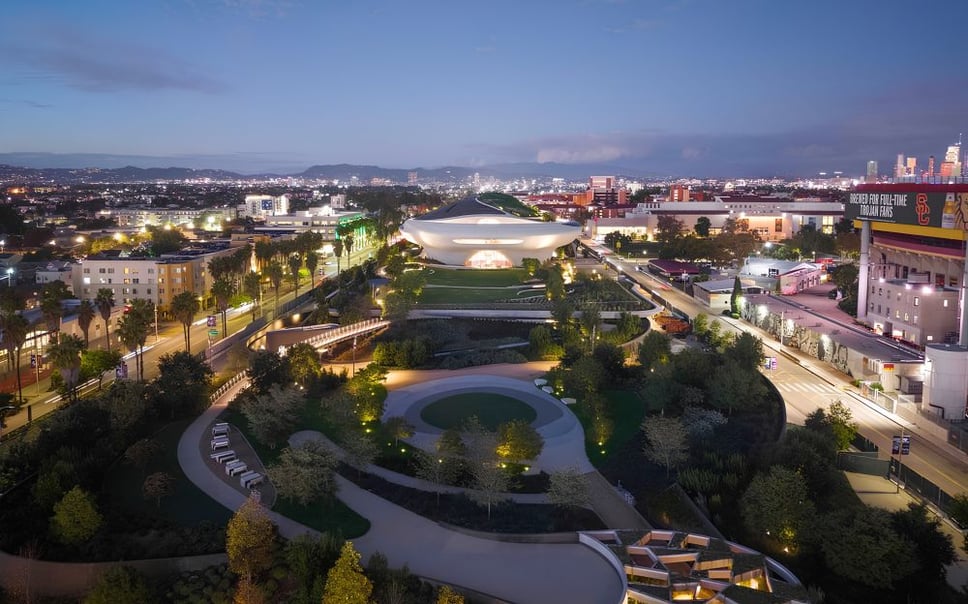
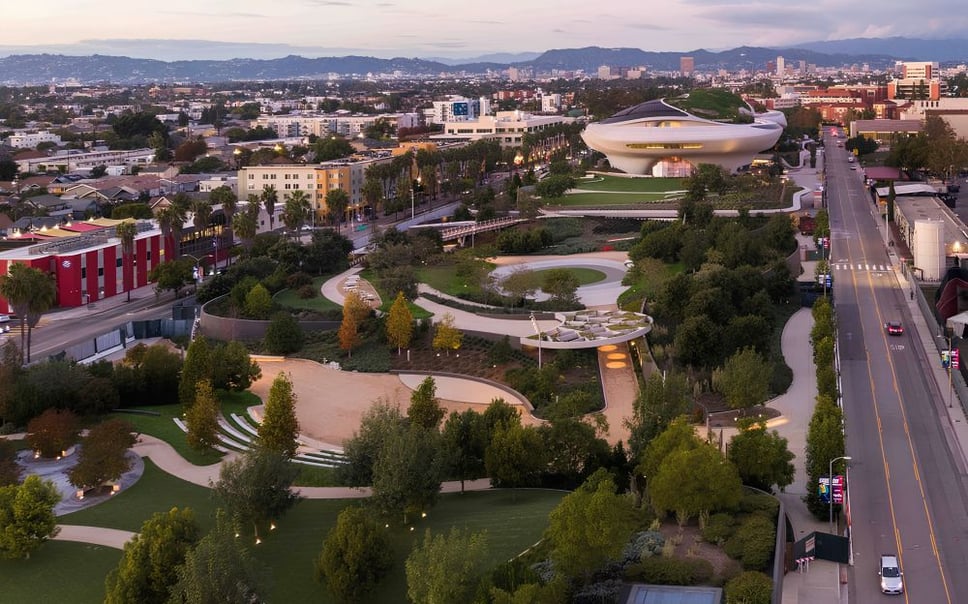
Surrounding the museum, landscape architect Mia Lehrer of Studio-MLA created a 13-acre park and gardens that replace the former asphalt lot. The green space includes over 300 trees, jacarandas, oaks and pines, meadows, a hanging garden, an amphitheater and a fountain designed to read as a waterfall. Ten monumental sculptures line the walkways, offering free visual art experiences for the neighborhood.
Access to the park, gardens, Skywalker Grill, the café and the research library does not require a ticket, making them open to anyone from 8 AM until sunset. The museum’s public hours run from 9 AM to 9 PM on weekdays and 9 AM to 9 PM on weekends, with the library opening an hour earlier than the galleries.
Visitors can reach the museum via the Metro E Line to Expo Park/USC station, and the venue shares the Exposition Park campus with the Natural History Museum, the California African American Museum and the California Science Center, encouraging a full day of cultural activity.
What visitors will see inside
The permanent collection spans more than 40,000 works, ranging from prehistoric cave paintings to contemporary illustration, comics and cinema. The museum places fine-art masters such as Artemisia Gentileschi, Norman Rockwell, Frida Kahlo and Diego Rivera alongside popular-culture icons like Frank Frazetta, Robert Crumb, N.C. Wyeth and Jack Kirby, presenting them as part of a continuous visual tradition.
The inaugural exhibition, The History of Narrative Art: Heroes • Myths • The Sacred, occupies the first floor and features over 1,300 pieces, including original works and 3-D-scanned reproductions of landmarks such as the Sistine Chapel ceiling. The exhibition traces how storytelling has shaped belief, community and identity across centuries.
A highlight for fans of the filmmaker is the complete Lucas Archives from 1971 to 2012, displayed in a dedicated cinema gallery. The archive showcases concept art, props, costumes and vehicle designs from the original six Star Wars films, offering a rare glimpse into the production process of the saga.
Beyond the galleries, the museum’s two theaters host continuous film screenings, while the research library provides free access to books, archives and digital resources. The on-site Skywalker Grill offers a sit-down dining experience, and the museum store sells merchandise related to the collection and the Lucas brand.
The Lucas Museum gives South Los Angeles a cultural anchor that blends high art with pop culture, inviting residents to see their own stories reflected alongside global narratives. Free access to the park and gardens turns a former parking lot into a community gathering space, while the museum’s emphasis on diverse storytelling aligns with LA’s multicultural identity.